

TITTLA 100Lbs Commercial Ice Maker: Key Features for Business

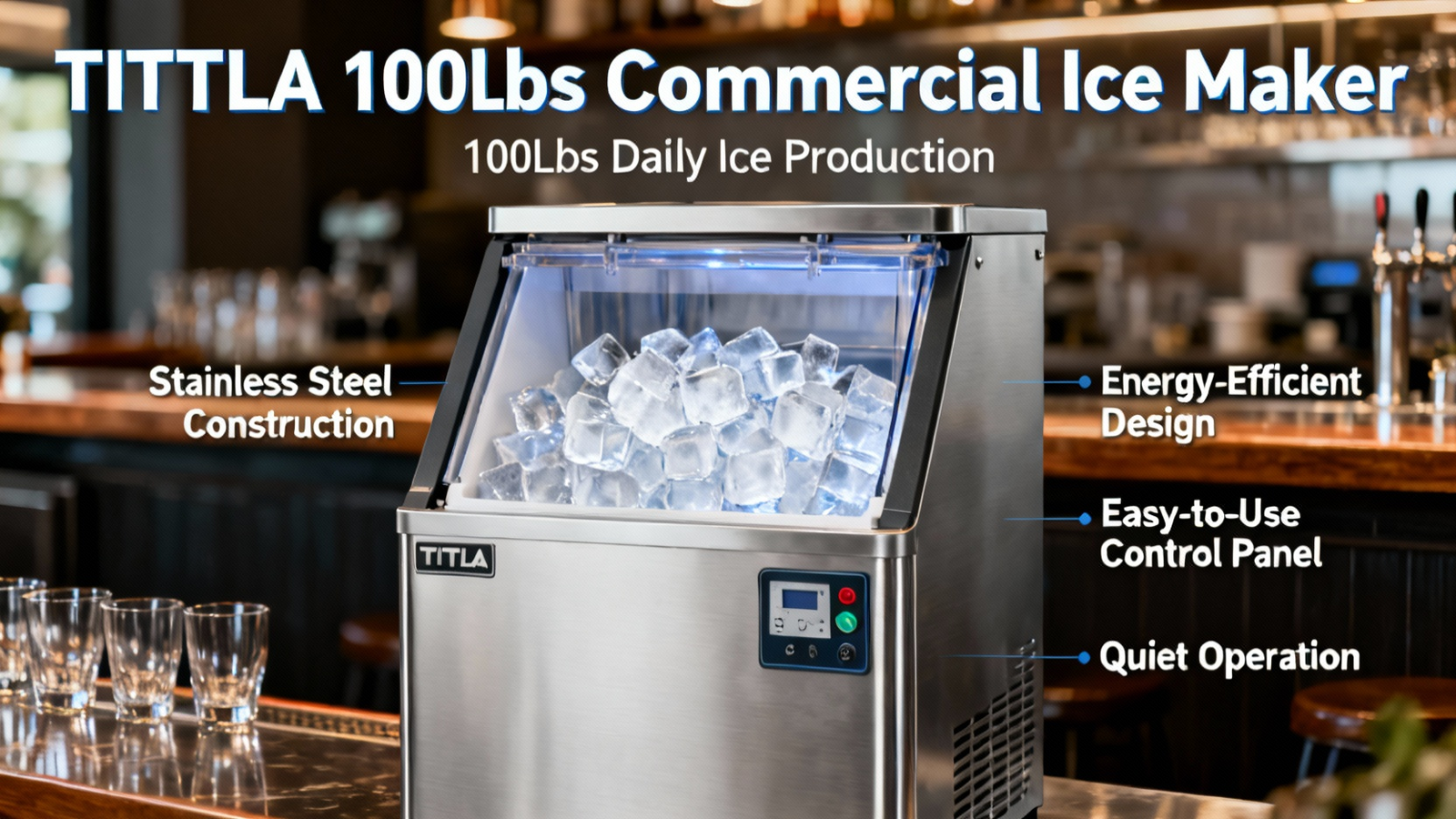
Optimizing Your Business with a Commercial Ice Maker: A Focus on the TITTLA 100Lbs/24H Machine
For bars, cafes, and restaurants, a reliable ice supply is non-negotiable. Choosing the right commercial ice maker impacts efficiency, drink quality, and operational hygiene. This article explores the key features that define a superior ice machine, using the TITTLA 100Lbs/24H Commercial Ice Maker as a benchmark, and examines the critical role of water filtration and smart design in commercial food service.
The Engine of Reliability: Compressor Power and Production Capacity
At the heart of any commercial ice maker is its compressor, the component responsible for the refrigeration cycle. The TITTLA machine utilizes a 495W imported compressor, engineered for rapid cycling. This enables it to produce 45 ice cubes in just 12-15 minutes and a substantial 100 pounds of ice per day. In high-volume settings, this capacity prevents the dreaded ice run-out during peak hours. As noted in discussions on commercial kitchen equipment, consistent output is often more critical than maximum theoretical capacity, as downtime directly affects sales and customer satisfaction. The machine’s 24-pound storage bin, paired with a thick insulation layer, ensures a ready reserve, balancing continuous production with accessible supply.
Water Quality: The Unseen Ingredient in Perfect Ice
Ice is a food product, and its clarity, taste, and hardness are directly tied to water quality. Tap water contains minerals and impurities that can lead to cloudy ice, off-flavors, and scale buildup inside the machine. The high-efficiency water filter in the TITTLA system addresses this by converting tap water into purified water for ice production. This is not just a convenience feature; it’s a maintenance necessity. Scale accumulation from hard water is a primary cause of mechanical failure in ice makers, a point frequently emphasized by equipment technicians on forums like r/refrigeration. Regular use of an integrated filter protects the internal components, ensures the taste neutrality of ice (crucial for craft cocktails and clear beverages), and extends the unit’s operational lifespan.
Hygienic Design and Operational Simplicity
Commercial equipment must be built for durability and easy cleaning. The TITTLA unit’s stainless steel construction is industry-standard for good reason: it resists corrosion, is non-porous, and can withstand frequent sanitization. Features like a removable water channel and an auto-clean function directly combat biofilm and mold growth, which are common hygiene challenges in ice machines. The inclusion of practical tools—a drain pipe for efficient meltwater removal and a dedicated ice scoop—promotes proper handling protocols. Using a scoop, rather than a glass or hand, is a fundamental food safety practice highlighted by health codes to prevent contamination, a principle supported by food safety guidelines on Wikipedia’s ice machine health concerns section.
Smart Features for Modern Workflows
Modern commercial ice makers integrate user-friendly controls that streamline operation and maintenance. The LCD display panel with functions for self-cleaning, defrosting, and malfunction alerts transforms routine upkeep from a guessing game into a guided process. The ability to adjust ice thickness is not trivial; thicker ice melts slower, ideal for blended drinks or whiskey, while thinner cubes may be preferred for soft drinks. The unit’s freestanding or built-in flexibility and its raised bottom (to avoid ground moisture) demonstrate thoughtful design for diverse installation environments, from a bustling bar backroom to a compact cafe corner.
In conclusion, selecting a commercial ice maker is a strategic decision that hinges on proven performance, hygienic operation, and intelligent design. The TITTLA 100Lbs/24H Commercial Ice Maker exemplifies these principles with its powerful compressor, integrated water filtration, and stainless steel, easy-clean construction. By prioritizing water purity, businesses can ensure crystal-clear, tasteless ice and significantly reduce maintenance issues caused by scale. The machine’s smart features, like auto-cleaning and adjustable settings, empower staff to maintain consistent quality with minimal training. Ultimately, an investment in a robust ice-making solution like this one supports operational efficiency, upholds food safety standards—a concern validated by both health codes and community discussions—and delivers the reliable foundation necessary for seamless service in any food and beverage setting.
This TITTLA 100Lbs commercial ice maker looks like a solid choice for keeping a busy bar or restaurant well-stocked.
\}}
This TITTLA 100Lbs commercial ice maker looks like it could be a real game-changer for keeping a busy bar stocked.
\}}
This TITTLA 100Lbs commercial ice maker looks like it could be a real game-changer for keeping a busy bar stocked.
\}}
This TITTLA 100Lbs commercial ice maker looks like it could really streamline operations for a busy bar or restaurant.
\}}
This TITTLA 100Lbs commercial ice maker looks like it could really streamline operations for a busy bar or restaurant.
\}}
This TITTLA 100Lbs commercial ice maker looks like it could really streamline operations for a busy bar or restaurant.
\}}
This TITTLA 100Lbs commercial ice maker looks like it could really streamline operations for a busy bar or restaurant.
\}}
This TITTLA 100Lbs commercial ice maker looks like it could really streamline operations for a busy bar or restaurant.
\}}
This TITTLA 100Lbs commercial ice maker seems like a solid choice for keeping a busy bar or restaurant fully stocked.
\}}
This TITTLA 100Lbs commercial ice maker seems like a solid choice for keeping a busy bar or restaurant fully stocked.
\}}
This TITTLA 100Lbs commercial ice maker seems like a solid choice for keeping a busy bar or restaurant fully stocked.
\}}
This TITTLA 100Lbs commercial ice maker looks like it could really streamline operations for a busy bar or restaurant.
\}}
This TITTLA 100Lbs commercial ice maker looks like it could really streamline operations for a busy bar or restaurant.
\}}
This TITTLA 100Lbs commercial ice maker looks like it could really streamline operations for a busy bar or restaurant.
\}}
This TITTLA 100Lbs ice maker looks like a solid choice for keeping a busy bar or restaurant well-stocked.
\}}
This TITTLA 100Lbs ice maker looks like a solid choice for keeping a busy bar or restaurant well-stocked.
\}}
This TITTLA 100Lbs ice maker looks like a solid choice for keeping a busy bar or restaurant well-stocked.
\}}
This TITTLA 100Lbs commercial ice maker seems like a solid choice for keeping a busy bar or restaurant well-stocked.
\}}
This TITTLA 100Lbs commercial ice maker seems like a solid choice for keeping a busy bar or restaurant well-stocked.
\}}
This TITTLA 100Lbs commercial ice maker seems like a solid choice for keeping a busy bar or restaurant well-stocked.
\}}
This TITTLA 100Lbs commercial ice maker looks like it could really streamline operations for a busy bar or restaurant.
\}}
This TITTLA 100Lbs commercial ice maker looks like it could really streamline operations for a busy bar or restaurant.
\}}
This TITTLA 100Lbs commercial ice maker looks like it could really streamline operations for a busy bar or restaurant.
\}}
This TITTLA 100Lbs commercial ice maker looks like a solid choice for keeping a busy bar well-stocked.
\}}
This TITTLA 100Lbs commercial ice maker looks like a solid choice for keeping a busy bar well-stocked.
\}}
This TITTLA 100Lbs commercial ice maker looks like a solid choice for keeping a busy bar well-stocked.
\}}
This TITTLA 100Lbs commercial ice maker looks like a solid choice for keeping a busy bar well-stocked.
\}}
This TITTLA 100Lbs commercial ice maker looks like a solid choice for keeping a busy bar well-stocked.
\}}
This TITTLA 100Lbs commercial ice maker looks like a solid choice for keeping a busy bar well-stocked.
\}}
This TITTLA 100Lbs commercial ice maker looks like a solid choice for keeping a busy bar well-stocked.
\}}
This TITTLA 100Lbs commercial ice maker seems like a solid choice for keeping a busy bar or restaurant well-stocked.
\}}
This TITTLA 100Lbs commercial ice maker seems like a solid choice for keeping a busy bar or restaurant well-stocked.
\}}
This TITTLA 100Lbs commercial ice maker seems like a solid choice for keeping a busy bar or restaurant well-stocked.
\}}
This TITTLA 100Lbs commercial ice maker seems like a solid choice for keeping a busy bar or restaurant well-stocked.
\}}
This TITTLA 100Lbs commercial ice maker seems like a solid choice for keeping a busy bar or restaurant well-stocked.
\}}
This TITTLA 100Lbs commercial ice maker seems like a solid choice for keeping a busy bar or restaurant fully stocked.
\}}
This TITTLA 100Lbs commercial ice maker seems like a solid choice for keeping a busy bar or restaurant fully stocked.
\}}
This TITTLA 100Lbs commercial ice maker seems like a solid choice for keeping a busy bar or restaurant fully stocked.
\}}
This TITTLA 100Lbs commercial ice maker seems like a solid choice for keeping a busy bar or restaurant fully stocked.
\}}
This TITTLA 100Lbs commercial ice maker looks like a solid choice for keeping a busy bar or restaurant well-stocked.
\}}
This TITTLA 100Lbs commercial ice maker seems like a great fit for keeping a busy bar stocked.
\}}
This TITTLA 100Lbs commercial ice maker looks like it could really streamline operations for a busy bar or restaurant.
\}}
This TITTLA 100Lbs commercial ice maker looks like it could really streamline operations for a busy bar or restaurant.
\}}
This TITTLA 100Lbs commercial ice maker looks like it could really streamline operations for a busy bar or restaurant.
\}}
This TITTLA 100Lbs commercial ice maker looks like it could really streamline operations for a busy bar or restaurant.
\}}
This TITTLA 100Lbs commercial ice maker looks like it could really streamline operations for a busy bar or restaurant.
\}}
This TITTLA 100Lbs commercial ice maker looks like a solid choice for keeping a busy bar or restaurant well-stocked.
\}}
This TITTLA 100Lbs commercial ice maker looks like a solid choice for keeping a busy bar or restaurant well-stocked.
\}}
This TITTLA 100Lbs commercial ice maker looks like a great fit for keeping a busy bar or restaurant stocked.
\}}
This TITTLA 100Lbs commercial ice maker looks like a great fit for keeping a busy bar or restaurant stocked.
\}}
This TITTLA 100Lbs commercial ice maker looks like a great fit for keeping a busy bar or restaurant stocked.
\}}