

TITTLA 100Lbs Commercial Ice Maker for Bars, Cafes, Restaurants

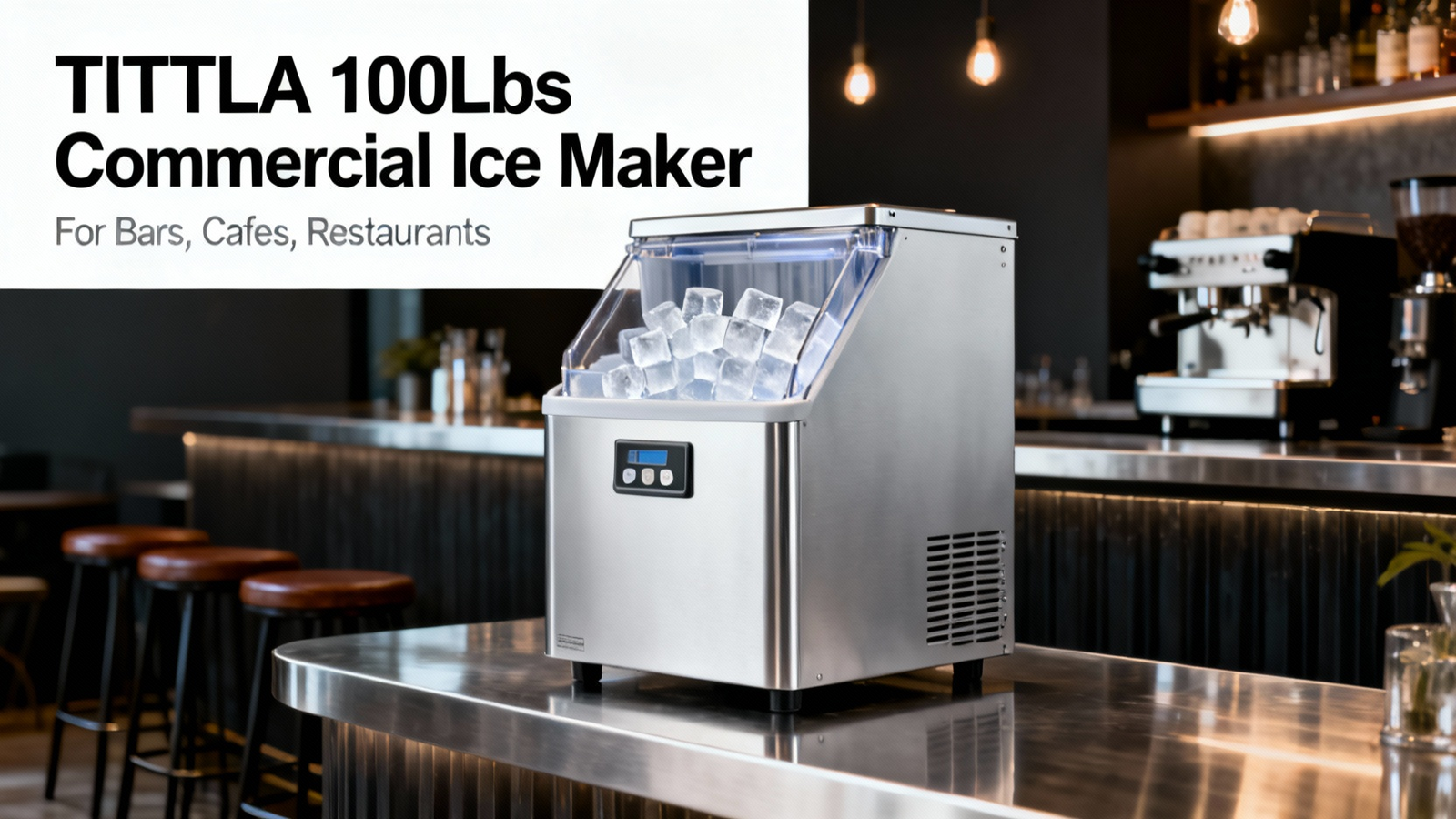
Optimizing Your Business with a Commercial Ice Maker: A Focus on the TITTLA 100Lbs/24H Machine
For bars, cafes, and restaurants, a reliable ice supply is non-negotiable. Choosing the right commercial ice maker impacts efficiency, drink quality, and operational hygiene. This article explores the key features that define a superior ice machine, using the TITTLA 100Lbs/24H Commercial Ice Maker as a benchmark, and examines the critical role of water filtration and smart design in commercial food service.
The Engine of Reliability: Compressor Power and Production Capacity
At the heart of any commercial ice maker is its compressor, the component responsible for the refrigeration cycle. The performance of this system directly dictates business readiness. The TITTLA machine utilizes a 495W imported compressor, enabling it to produce 45 ice cubes in just 12-15 minutes and a substantial 100 pounds of ice per day. This aligns with commercial demands where high-volume output is critical during peak hours. As noted in discussions on commercial appliance reliability, consistent output is a primary concern for business owners, as intermittent failures can directly impact sales and customer satisfaction. The machine’s 24-pound storage bin, coupled with a thick insulation layer, ensures a ready reserve, mitigating the risk of running out during a rush.
Purity in Every Cube: The Critical Role of Water Filtration
Ice quality is inseparable from water quality. The inclusion of a high-efficiency water filter in units like the TITTLA ice maker is not a luxury but a necessity for taste and safety. Tap water can contain minerals, chlorine, and other impurities that affect ice clarity, taste, and can even scale up the machine’s internal components, reducing efficiency and lifespan. A dedicated filter quickly converts tap water into purified water, ensuring clean-tasting ice. This is supported by food safety guidelines, which treat ice as a food product. The Wikipedia entry on water filters explains their function in removing physical particles and chemical contaminants, a process essential for any ice used for human consumption. The removable water channel in this design further simplifies regular cleaning, preventing biofilm buildup.
Engineered for the Workflow: Hygiene and Operational Intelligence
Commercial equipment must be designed for the rigors of daily use. The stainless steel construction of this ice maker is a standard in the industry for its durability, corrosion resistance, and ease of sanitization. Beyond build quality, intelligent features streamline operation. The LCD control panel with one-touch adjustments for ice thickness and timing puts control at the user’s fingertips. Crucially, the auto-clean function addresses a major pain point. As highlighted in hospitality subreddits, manual descaling and cleaning are often neglected due to time constraints, leading to machine malfunctions and unsanitary conditions. An automated cycle promotes consistent maintenance. The inclusion of practical tools like a drain pipe to evacuate meltwater and a dedicated ice scoop—not a glass or hand—upholds hygiene standards, a point frequently emphasized in food service best practices.
Meeting Diverse Commercial Demands
The ultimate test of a commercial ice maker is its versatility across different venues. From a coffee shop needing ice for iced beverages to a bar crafting cocktails, the requirement is for consistent, clean, and readily available ice. The TITTLA machine’s freestanding design, compact footprint (29.92″H x 14.17″W x 16.93″D), and substantial output make it suitable for a wide range of applications, including canteens, restaurants, and drink shops. Features like the observation window with blue interior lighting allow for easy monitoring without opening the bin, preserving cold air. This focus on practical detail ensures the machine integrates seamlessly into busy workflows, supporting efficiency as noted in user reviews of similar equipment where reliability directly affects daily operations.
Conclusion: Investing in Operational Excellence
Selecting a commercial ice maker is a strategic decision that impacts daily operations, customer experience, and long-term overhead. As we’ve explored, key considerations include powerful and consistent production capacity to meet demand, integrated water filtration for purity and machine health, and intelligent, hygienic design that simplifies maintenance and complies with food safety standards. The TITTLA 100Lbs/24H Commercial Ice Maker exemplifies this integration with its robust compressor, effective filtration system, stainless steel build, and user-centric features like auto-cleaning and a functional LCD panel. For business owners in the United States, from bar managers to café owners, investing in a machine with these capabilities means more than just making ice; it means ensuring a seamless, reliable, and sanitary supply chain for a fundamental component of service. By prioritizing these engineered features, businesses can enhance efficiency, protect their investment, and ultimately, serve a superior product to their customers.
This TITTLA ice maker sounds like a solid choice for keeping a busy bar or restaurant well-stocked.
\}}
This TITTLA ice maker sounds like a solid choice for keeping a busy bar or restaurant well-stocked.
\}}
This TITTLA ice maker sounds like a solid choice for keeping a busy bar or restaurant well-stocked.
\}}
This TITTLA ice maker sounds like a solid choice for keeping a busy bar or restaurant well-stocked.
\}}
This TITTLA ice maker looks like a solid choice for keeping the drinks perfectly chilled in a busy bar.
\}}