

Mastering Wine Storage: Dual Zone Coolers for 154 Bottles

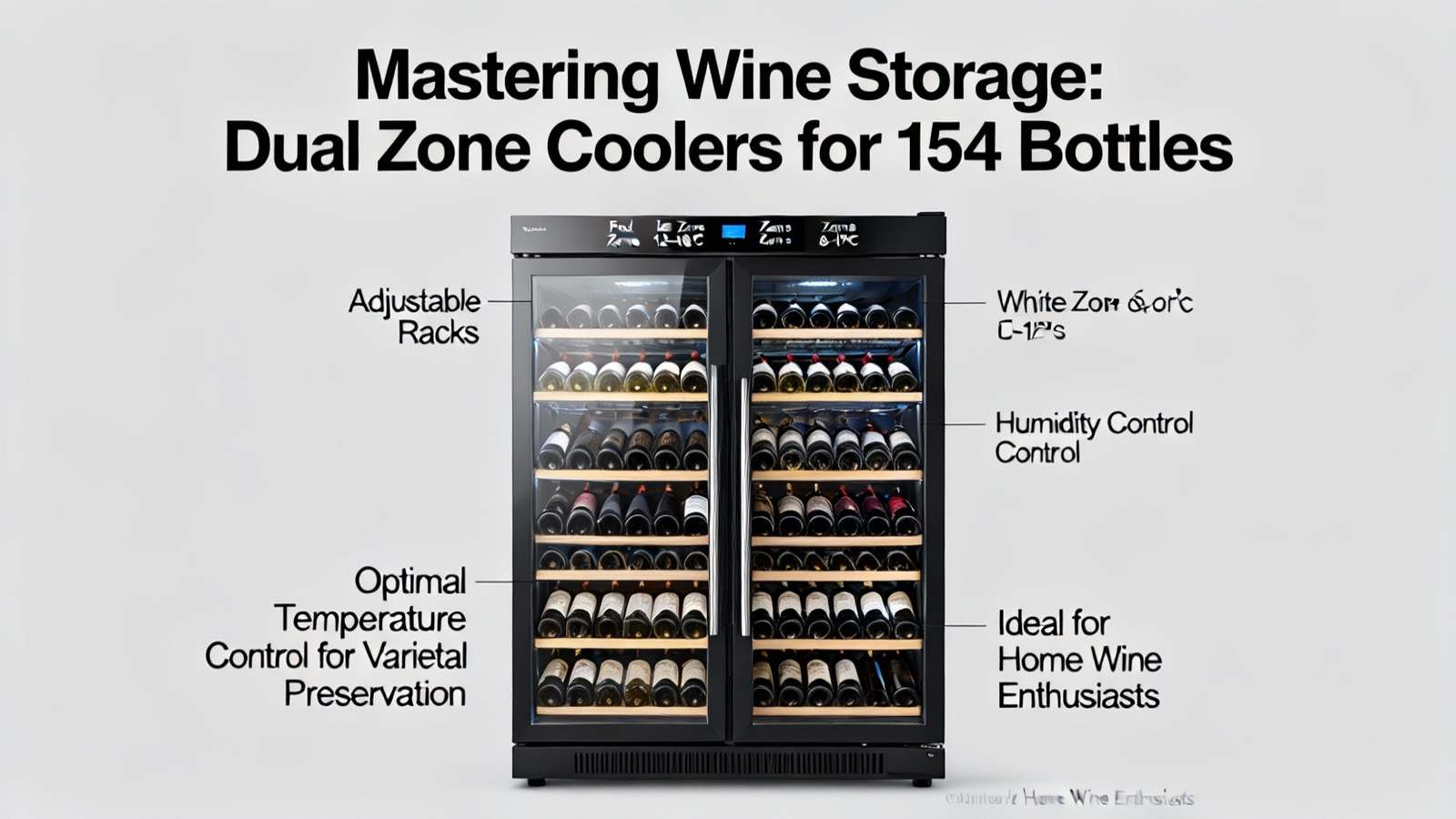
For the serious collector or hospitality professional, mastering wine storage is key to preservation. This article explores the critical role of precise temperature zoning, high-capacity design, and intelligent features in a modern wine refrigerator, demonstrating how the right unit safeguards your investment and elevates the tasting experience.
The Science of Dual Zone Temperature Control
Not all wines mature at the same temperature. White wines, sparkling wines, and rosés generally require colder storage (40-55°F) to preserve delicate aromatics and acidity, while reds need slightly warmer conditions (55-65°F) to allow their complex structure to develop properly. A dual zone wine cooler provides this essential independent control, acting as two specialized cellars in one. As noted in discussions on wine storage, consistent temperature is paramount; fluctuations can cause expansion and contraction, potentially drawing air into the bottle and oxidizing the wine (Reddit, r/wine community insights). This precise zoning ensures each bottle is held at its optimal condition, ready for service.
Engineering High-Capacity Storage
A capacity of 154 bottles represents a significant investment in both quantity and variety. Effective design for such volume requires advanced cooling technology that distributes cold air evenly without creating hot spots or excessive vibration, which can disturb a wine’s sediment and accelerate aging. The engineering focus shifts from simply cooling a space to maintaining a perfectly stable microclimate. Wikipedia’s entry on Wine cellars emphasizes that stability in temperature and humidity (generally 50-70%) is more critical than the exact temperature, preventing cork drying and label damage. A unit built for this scale must integrate robust compressors and insulation to achieve such stability efficiently.
Intelligent Features for Security and Ambiance
Beyond core cooling, modern units integrate user-centric features. A locking function, crucial for commercial settings or homes with children, secures a valuable collection. Interior lighting, such as soft blue LEDs, serves a dual purpose: it provides visibility without the heat emission of standard bulbs, and it enhances display aesthetics. The user interface is equally important; an LED display and intuitive controls demystify operation, allowing for easy monitoring and adjustment. These elements combine to create a appliance that is not only functional but also a seamless part of the living or retail environment, much like the sleek stainless steel exterior of this 154 bottle wine cooler.
Balancing Performance and Efficiency
The latest refrigeration technologies aim to reduce energy consumption without sacrificing the precise performance wine storage demands. This involves using high-efficiency compressors, improved insulation materials, and smart cooling cycles that minimize runtime. As energy standards become stricter globally, the ability to protect a collection while controlling operational costs is a major consideration for buyers. This efficiency aligns with a broader trend in appliance design, where performance and sustainability are no longer mutually exclusive but are engineered together from the ground up.
In conclusion, selecting a high-capacity wine refrigerator is a decision that directly impacts the longevity and quality of your wine collection. As we’ve explored, the cornerstone of proper storage is independent dual-zone temperature control, a feature grounded in the fundamental science of wine preservation that addresses the distinct needs of different varietals. Supporting this, the engineering behind stable humidity and temperature across 154 bottles is complex, requiring advanced cooling systems to protect your investment from the damaging effects of fluctuation, a point consistently underscored by experts and enthusiasts alike. The integration of practical security features and low-heat LED lighting transforms the unit from a simple appliance into a secure, elegant display. Furthermore, modern designs successfully balance this robust performance with energy-efficient operation, reducing long-term costs. Therefore, a unit that synthesizes these elements—like the featured 24″ seamless design—offers more than just storage; it provides a professional, reliable environment that ensures every bottle, whether a delicate Sauvignon Blanc or a bold Cabernet Sauvignon, is preserved at its peak until the moment it is poured.
This article really highlights why precise temperature zoning is so critical for a serious collection.
\}}
This article really highlights why precise temperature zoning is so critical for a serious collection.
\}}
This article really highlights why precise temperature zoning is so critical for a serious collection.
\}}
This article really highlights why precise temperature zoning is so critical for a serious collection.
\}}
This article really highlights why precise temperature zoning is so critical for a serious collection.
\}}
This article really highlights why precise temperature zoning is so critical for a serious collection.
\}}
This article really highlights why precise temperature zoning is so critical for a serious collection.
\}}
This article really highlights why precise temperature zoning is so critical for a serious collection.
\}}