

Hybrid Mattress Layers: Pressure Relief & Support Explained

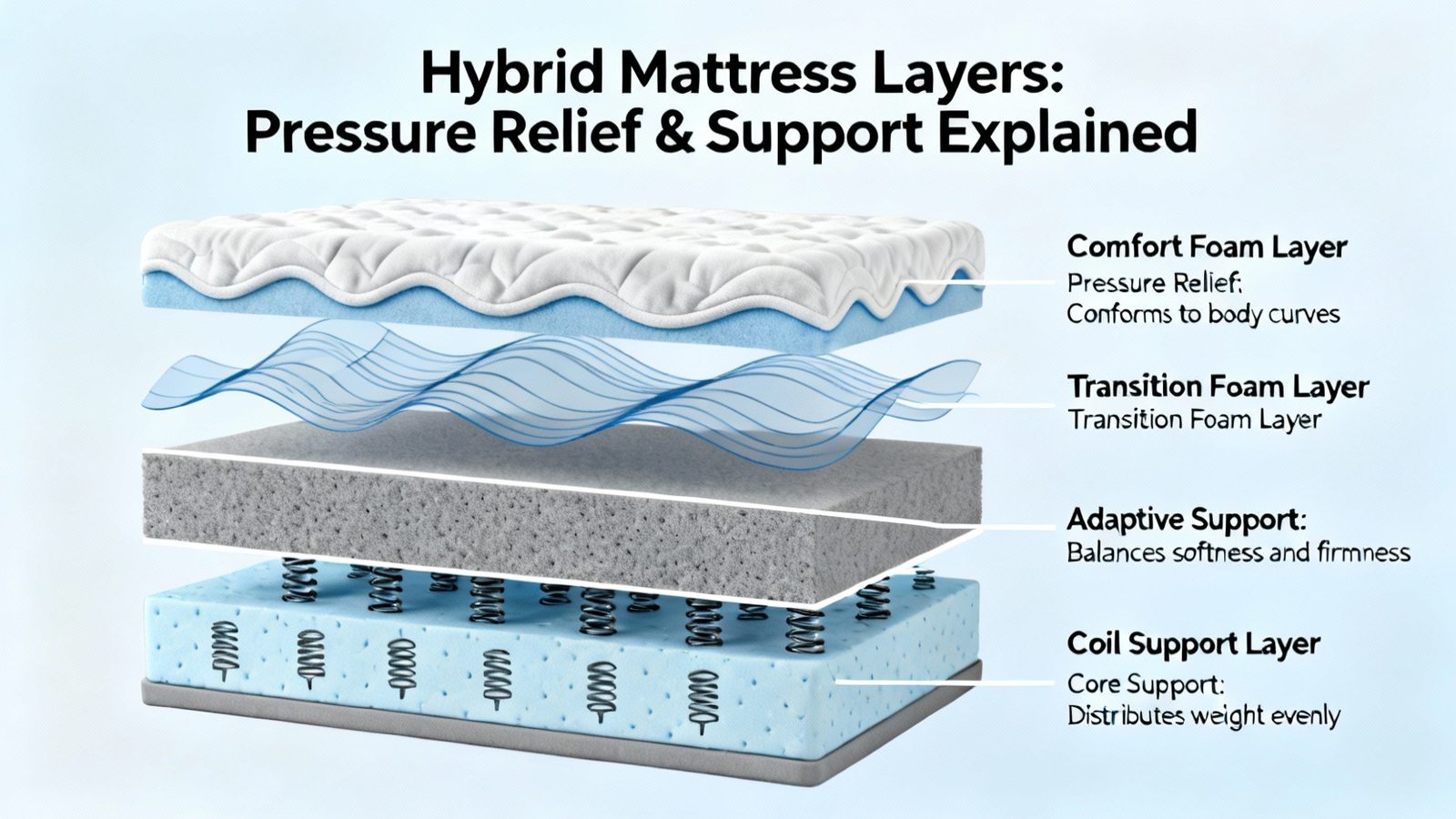
Discovering the perfect mattress requires understanding how materials and engineering converge. This article delves into the sophisticated construction of a modern hybrid mattress, examining how its layered design of knit fabric, memory foam, and pocket springs works in harmony to deliver a sleep experience that prioritizes both pressure relief and durable support.
Engineered Comfort: The Top Comfort Layer System
The initial contact layer is crucial for comfort and temperature regulation. This mattress uses a 270gsm knit fabric, a breathable material designed for airflow. Beneath it, a choice of 1cm gel-infused memory foam or 3cm standard foam addresses body contouring. Gel memory foam, in particular, is noted for its temperature-regulating properties, a feature discussed by users seeking cooler sleep on forums like Reddit (2023). This 4cm composite layer is engineered to cradle the body, initiating the pressure relief process before engaging the core support system.
Targeted Support: The Pocket Spring Core
The defining support comes from an 18cm core of individually pocketed springs. Each spring, made from 1.8mm wire, is encased in its own fabric pocket. This allows them to move independently, providing zoned support that aligns the spine by responding precisely to pressure points like hips and shoulders. This technology, which has evolved from traditional Bonnell coils, is widely recognized for minimizing motion transfer, as referenced in sleep product discussions. The independent action is key to the mattress’s ability to offer resilience without the bounce of interconnected spring units.
Safety, Stability, and Overall Construction Integrity
Beyond comfort and support, mattress safety and edge integrity are paramount. The surrounding borders incorporate additional foam and fire-retardant materials, meeting stringent U.S. safety standards like the CPSC’s 16 CFR Part 1633 open-flame regulation. A sturdy polyester bottom cloth ensures the mattress remains stable on various bed frames. This comprehensive approach to construction, from the fire-retardant barriers to the reinforced edges, ensures the mattress is not only comfortable but also durable and safe for long-term use, addressing common consumer concerns about mattress longevity and safety.
The Hybrid Advantage: A Balanced Sleep Conclusion
In summary, this 10″ mattress exemplifies the modern hybrid advantage by strategically layering materials to achieve a specific sleep outcome. The breathable knit cover and gel memory foam top layer work in tandem to manage temperature and provide initial contouring, a feature often highlighted by sleep enthusiasts for its comfort benefits. The substantial pocket spring core delivers the essential, targeted support that maintains proper spinal alignment, a fundamental principle for restorative sleep. The inclusion of reinforced edges and safety materials speaks to a commitment to durability and consumer protection. Ultimately, this construction creates a synergistic effect: the surface offers adaptive softness and pressure dispersion, while the underlying spring system provides the necessary push-back to prevent the “stuck-in-the-mud” feeling sometimes associated with all-foam beds. For the sleeper seeking a balanced surface that avoids extremes, this blend of foam cushioning and resilient spring support presents a compelling solution designed for consistent comfort and support night after night.
This article really helped me understand how the layered design of a hybrid mattress provides both pressure relief and support.
\}}
This article really helped me understand how the layered design of a hybrid mattress provides both pressure relief and support.
\}}
This article really helped me understand how the layered design of a hybrid mattress provides both pressure relief and support.
\}}
This article really helped me understand how the layered design of a hybrid mattress provides both pressure relief and support.
\}}
This article really helped me understand how the layered design of a hybrid mattress provides both pressure relief and support.
\}}
This article really helped me understand how the layered design of a hybrid mattress provides both pressure relief and support.
\}}
This article really helped me understand how the layered design of a hybrid mattress provides both pressure relief and support.
\}}
This article really helped me understand how the layered design of a hybrid mattress provides both pressure relief and support.
\}}
This article really helped me understand how the layered design of a hybrid mattress provides both pressure relief and support.
\}}
This article really helped me understand how the layered design of a hybrid mattress provides both pressure relief and support.
\}}
This article really helped me understand how the layered design of a hybrid mattress provides both pressure relief and support.
\}}
This article really helped me understand how the layered design of a hybrid mattress provides both pressure relief and support.
\}}
This article really helped me understand how the layered design of a hybrid mattress provides both pressure relief and support.
\}}