

Commercial Stainless Steel Ice Maker Guide for Restaurants

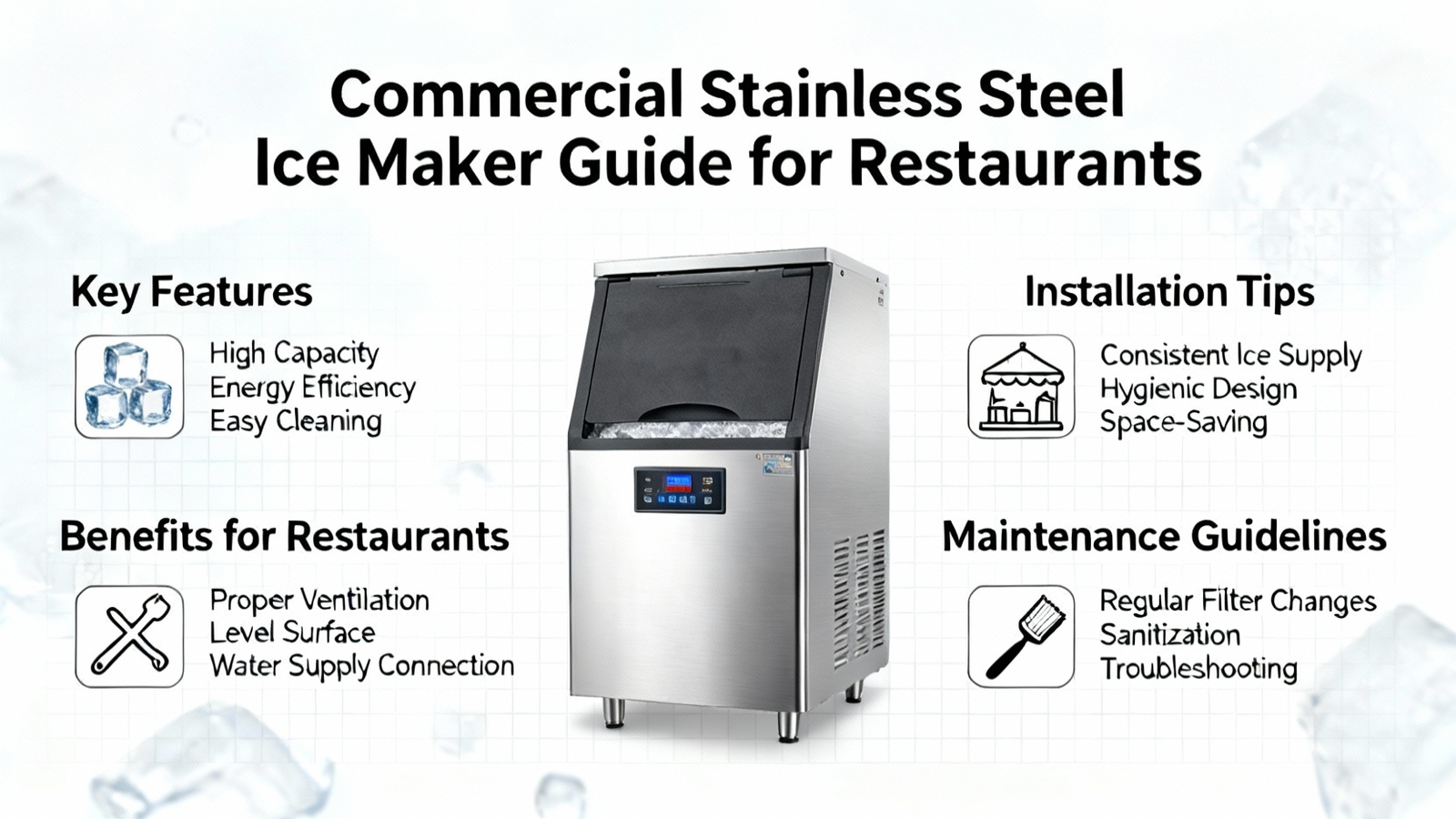
For restaurants, bars, and hotels, a reliable ice maker is essential. This guide explores the key features, installation requirements, and safety protocols for a heavy-duty commercial ice maker with durable stainless steel construction, designed for demanding environments. Understanding these details ensures optimal performance and longevity for your business.
Engineering for Commercial Durability and Efficiency
This ice maker’s core is built around durable stainless steel construction, a standard in commercial kitchens for its resistance to corrosion, ease of cleaning, and longevity. It operates on standard 110V/60Hz power, drawing 780W, and utilizes environmentally friendly R290 (propane) refrigerant. R290 has a lower Global Warming Potential (GWP) compared to traditional hydrofluorocarbons (HFCs), aligning with growing environmental regulations. As noted in a discussion on sustainable refrigeration, alternatives like hydrocarbons are gaining traction for their efficiency and reduced environmental impact (Reddit, r/Appliances, 2023). Its compatibility with climate types SN, N, and ST ensures reliable performance across varied temperature environments common in North America.
Critical Installation and Site Preparation
Proper installation is non-negotiable for safety and efficiency. The unit requires a direct connection to a drinking water supply with precise pressure between 14.5-58 psi; outside this range, a changeover valve is mandatory. A gravity-fed drain line, with its outlet lower than the machine’s, must be connected to handle wastewater and meltwater. The unit needs a minimum of 5.9 inches of clearance on all sides for airflow, which is critical for condenser efficiency and preventing overheating. The 70-inch three-prong plug should connect directly to a grounded outlet; extension cords are prohibited due to fire risk. After delivery, the unit must stand upright for 24 hours to let the refrigerant oil settle, a critical step for compressor longevity referenced in many appliance manuals.
Operational Safety and Best Practices
Adhering to safety guidelines protects both personnel and equipment. The ice maker must be kept away from flammable materials, direct sunlight, and heat sources like stoves, as ambient temperature directly influences ice production cycles. It is designed for indoor use only; outdoor operation exposes electrical components to moisture and temperature extremes. Only potable water should be used—other liquids can damage the system and create unsafe ice. Regular cleaning, as emphasized by food safety authorities, is also crucial to prevent scale and microbial growth. For a model that embodies these robust features, consider the commercial stainless steel ice maker.
Understanding Refrigeration and Performance Factors
The machine’s performance is tied to its refrigeration cycle. The use of R290 refrigerant is part of a broader industry shift. According to Wikipedia, hydrocarbons like propane are “being used increasingly in residential and commercial refrigeration applications” due to their excellent thermodynamic properties and low environmental impact. The climate type classification (SN, N, ST) indicates the ambient temperature ranges in which the unit is tested to perform optimally. Performance factors like ice production time and energy efficiency are influenced by the surrounding air and water temperatures. The safety protection type I denotes the appliance’s insulation and protection against electric shock, a critical certification for commercial equipment. Exploring a high-capacity unit like this stainless steel ice maker highlights these engineering principles in practice.
In summary, this heavy-duty commercial ice maker is engineered for demanding, high-volume environments like restaurants and hotels. Its stainless steel build, efficient R290 refrigerant system, and specific climate compatibility form the foundation of its reliability. However, its promised performance is entirely dependent on correct implementation: precise water pressure, mandatory drainage, adequate ventilation, and strict adherence to safety protocols regarding placement, power, and a proper 24-hour settling period are all critical. Neglecting these installation and operational guidelines can lead to reduced efficiency, premature failure, or safety hazards. By understanding both the robust engineering—such as the environmentally conscious refrigerant choice detailed in industry resources—and the non-negotiable setup requirements, business owners can ensure this key piece of equipment delivers a consistent return on investment. For operations requiring proven durability, this commercial ice maker represents a solid choice when installed and maintained with care.
This guide really highlights why a durable stainless steel ice maker is a smart investment for any busy restaurant.
\}}
This guide really highlights why a durable stainless steel ice maker is a smart investment for any busy restaurant.
\}}
This guide really highlights why a durable commercial ice maker is a must-have for busy restaurant kitchens.
\}}
This guide really highlights why a durable commercial ice maker is a must-have for busy restaurant kitchens.
\}}
This guide really highlights why a durable commercial ice maker is a must-have for busy restaurant kitchens.
\}}
This guide really highlights why a durable commercial ice maker is a must-have for busy restaurant kitchens.
\}}
This guide really highlights why a durable commercial ice maker is a must-have for busy restaurant kitchens.
\}}