

Commercial Ice Maker Guide: Features, Installation, Safety

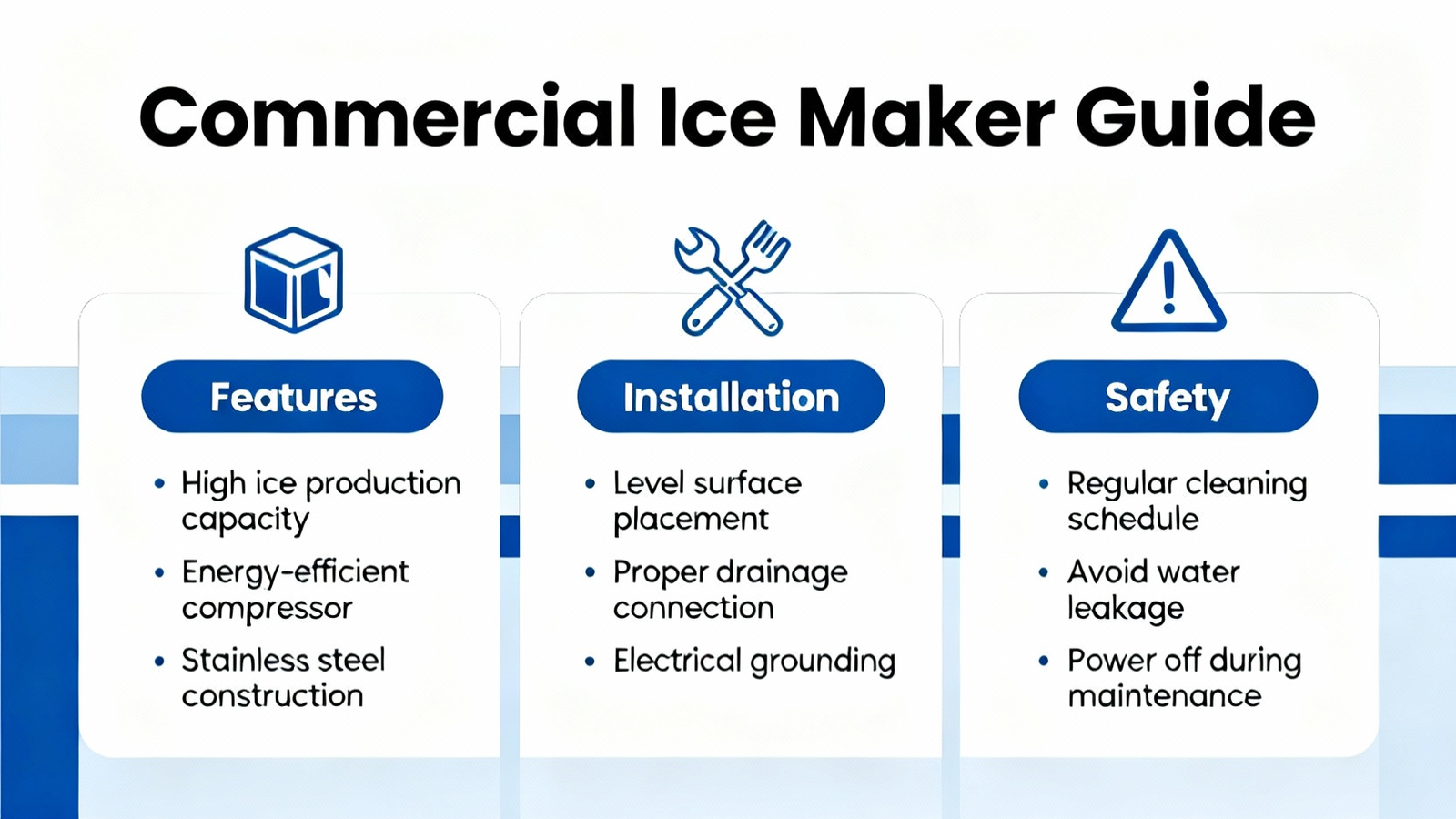
Heavy-Duty Commercial Ice Maker: The Ultimate Guide to Features, Installation, and Safety
Selecting the right commercial ice maker is critical for any foodservice operation. This guide delves into the specifics of a durable, stainless steel unit designed for 110V operation, covering its robust construction, essential installation requirements, and vital safety protocols to ensure reliable, long-term performance in demanding environments like restaurants, bars, and hotels.
Engineering for Endurance and Efficiency
At the core of this ice maker’s design is a commitment to durability and operational efficiency. The stainless steel construction is not just for aesthetics; it provides superior corrosion resistance and ease of cleaning, which is paramount in commercial kitchens where sanitation is regulated. The use of R290 (propane) refrigerant is a significant modern feature. According to Wikipedia, R290 has a “negligibly low ozone depletion potential and very low global warming potential” compared to traditional hydrofluorocarbons (HFCs), making it an environmentally responsible choice. Its compatibility with climate types SN, N, and ST ensures reliable performance across varied North American environments, from constant sub-tropical to temperate conditions.
With a net weight of 145.51 lb and dimensions of 26.4” x 23.2” x 61.4”, this unit is built for stationary, high-output use. Its 780W power draw on a standard 110V/60Hz circuit makes it accessible for most commercial settings without requiring specialized electrical upgrades. For operations requiring substantial output, a model like the 23.23 in. 750 lbs./24h Capacity Commercial Stainless Steel Ice Maker represents a similar class of high-capacity, rugged equipment.
Critical Pre-Installation and Setup Protocols
Proper setup is non-negotiable for performance and warranty preservation. Two of the most crucial steps are often highlighted by professionals in forums. First, the mandated 24-hour upright settling period after delivery is essential. As discussed by users on Reddit, this allows oil in the compressor to settle, preventing damage upon startup. A user in r/Appliances emphasized, “Skipping the settling time is the fastest way to kill a new fridge or ice maker”. Second, correct water supply connection is vital. The unit requires a drinking water source with a pressure between 14.5 and 58 psi. Pressure outside this range can lead to poor ice production or mechanical failure, necessitating a pressure changeover valve.
- Space Requirements: Maintain at least 5.9 inches (15 cm) of clearance on all sides for adequate airflow and heat dissipation.
- Drainage is Gravity-Based: The wastewater and meltwater drain via gravity, so the drain pipe outlet must be lower than the ice maker’s outlet to prevent backups.
- Initial Power-Up: After the 24-hour settle, allow an additional hour for the R290 refrigerant to stabilize before first plug-in.
Operational Safety and Best Practices
Adhering to safety guidelines protects both your investment and your premises. The unit’s Safety Protection Type I designation indicates it is grounded for protection against electric shock. Key safety rules include: never using an extension cord (which can overheat and pose a fire risk), keeping the unit and cord away from flammable materials, and avoiding outdoor use where environmental factors are uncontrolled. Furthermore, only potable water should be used; introducing other liquids can damage the system and create unsanitary ice.
Placement is also a safety and efficiency concern. The ice maker should be kept from direct sunlight and heat sources like stoves or radiators. As noted in the instructions, ambient temperature influences ice-making cycle times—a hotter environment forces the unit to work harder, reducing efficiency. This underscores the importance of installing the unit in a cool, well-ventilated location. For consistent, high-volume needs, ensuring these conditions will maximize the output of a capable commercial stainless steel ice maker.
Conclusion: A Strategic Investment for Demanding Operations
Investing in a heavy-duty commercial ice maker is a significant decision that impacts daily operations. This analysis reveals that success hinges on three pillars: the inherent quality of the equipment, meticulous installation, and disciplined operational safety. The stainless steel build and eco-friendly R290 refrigerant offer long-term durability and environmental compliance, while the specific voltage and climate compatibility ensure it fits standard U.S. commercial settings. However, as evidenced by community discussions on platforms like Reddit and technical specifications on sites like Wikipedia, the manufacturer’s guidelines—from the critical settling period to precise water pressure requirements—are based on fundamental engineering principles. Ignoring them risks premature failure.
Ultimately, a model built to these specifications, such as the referenced 750 lbs./24h Capacity Commercial Ice Maker, is more than an appliance; it’s a core component of your beverage and food service infrastructure. By understanding its requirements for space, drainage, power, and environment, you secure reliable ice production. This ensures you can meet customer demand consistently, safeguard your staff and property through correct use, and protect your investment for years to come, making it a strategically sound choice for any high-volume hospitality business.
This guide really highlights why choosing the right commercial ice maker is so important for a busy kitchen.
\}}
This guide really highlights why choosing the right commercial ice maker is so important for a busy kitchen.
\}}
This guide really highlights why choosing the right commercial ice maker is so important for a busy kitchen.
\}}
This guide really highlights why choosing the right commercial ice maker is so important for a busy kitchen.
\}}
This guide really highlights why choosing the right commercial ice maker is so important for a busy kitchen.
\}}
This guide really highlights why a heavy-duty commercial ice maker is such a smart investment for busy kitchens.
\}}
This guide really highlights why a heavy-duty commercial ice maker is such a smart investment for busy kitchens.
\}}
This guide really highlights why a heavy-duty commercial ice maker is such a smart investment for busy kitchens.
\}}
This guide really highlights why a heavy-duty commercial ice maker is such a smart investment for busy kitchens.
\}}
This guide really highlights why a heavy-duty commercial ice maker is such a smart investment for busy kitchens.
\}}