

Commercial Ice Maker Guide: 110V, Stainless Steel, R290

Heavy-Duty Commercial Ice Maker: Ultimate Guide for Businesses
Selecting the right commercial ice maker is a critical decision for any food service or hospitality business. This guide delves into the specifics of a durable, stainless steel unit designed for 110V operation, covering its robust construction, essential installation requirements, and vital safety protocols. Understanding these details ensures reliable performance, longevity, and safe operation in demanding environments like restaurants, bars, and hotels.
Engineering for Durability and Environmental Compliance
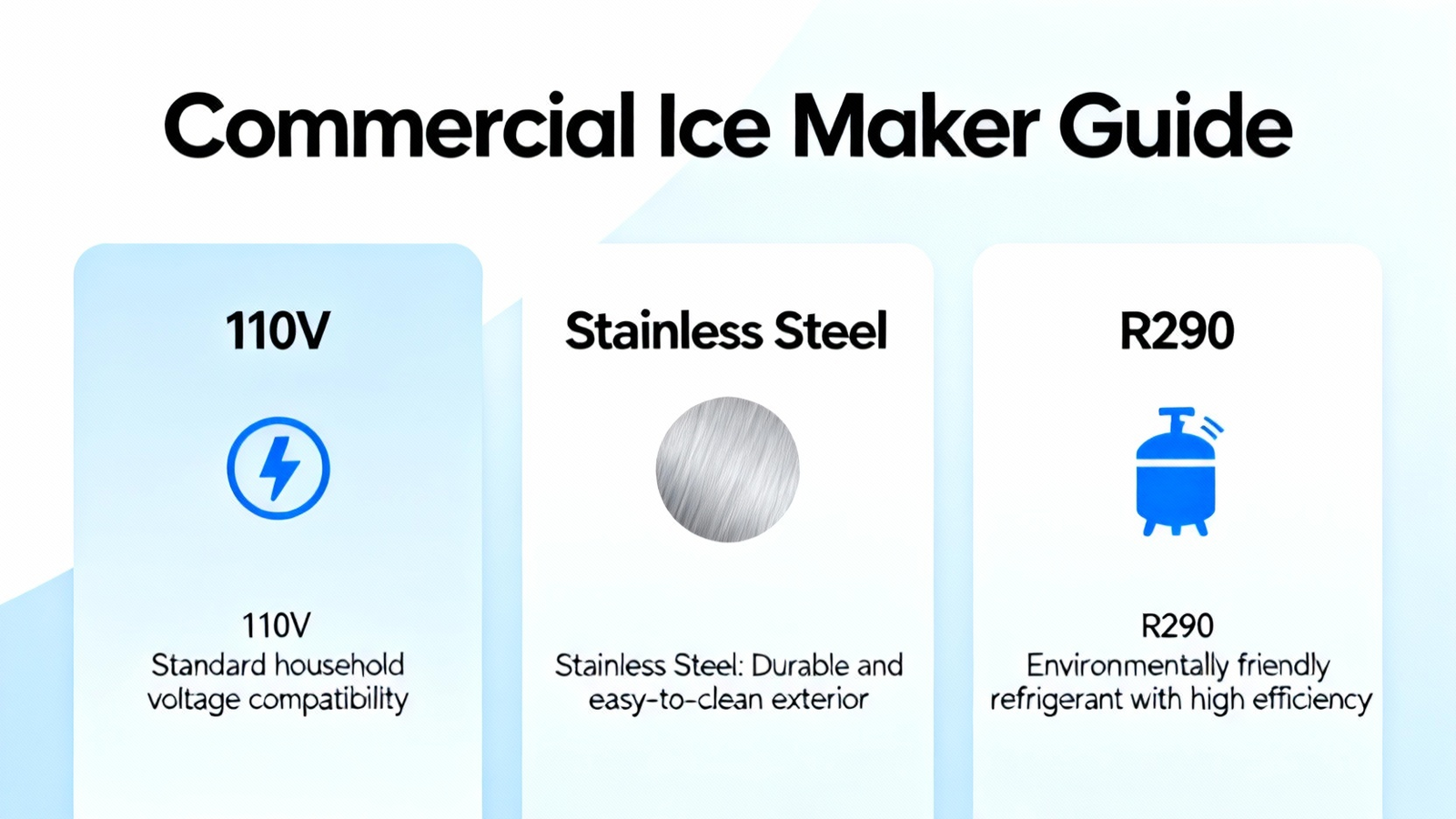
At the core of this unit is its stainless steel construction, a material chosen for its exceptional corrosion resistance and ease of cleaning, which is paramount in commercial food safety. The use of R290 (propane) refrigerant marks a significant step toward environmental responsibility. According to Wikipedia, R290 has a “negligibly low global warming potential (GWP) compared to traditional HFC refrigerants” and is recognized for its high energy efficiency, though it is flammable and requires careful handling. This aligns with global shifts, like the U.S. EPA’s SNAP program, encouraging lower-GWP alternatives. The machine’s compatibility with climate types SN, N, and ST ensures it can maintain reliable ice production in a range of ambient temperatures, from subtropical to temperate environments.
Critical Installation and Setup Protocols
Proper installation is non-negotiable for performance and safety. The requirements highlight key considerations often debated by professionals. For instance, the need for a drinking water supply connects directly to ice quality and machine health, as noted in discussions on r/KitchenConfidential, where veterans emphasize water line filtration. The mandate to wait 24 hours after delivery before startup is crucial for the compressor’s oil to settle, a point underscored by appliance technicians in forums to prevent immediate failure. Furthermore, correct water pressure (14.5-58 psi) and gravity-based drainage setup are not suggestions but requirements; improper drainage is a frequent cause of unit malfunction and sanitation issues in commercial settings.
Operational Safety and Best Practices
Adhering to the listed safety notes mitigates significant risks. The warning against extension cords is rooted in electrical code principles for high-wattage appliances (780W in this case), as the increased resistance can cause overheating and fire—a concern validated by safety alerts from authorities like OSHA. Keeping the unit away from heat sources and direct sunlight prevents the compressor from overworking, directly impacting efficiency and lifespan. The instruction to use only water aligns with food safety standards; introducing other liquids can damage the system and contaminate ice. These protocols collectively form an essential operational framework, ensuring the commercial stainless steel ice maker operates as intended without hazard.
Conclusion: A Strategic Investment for Demanding Operations
In summary, this heavy-duty commercial ice maker represents a significant investment in the operational backbone of a restaurant, bar, hotel, or catering service. Its stainless steel build and environmentally conscious R290 refrigerant system offer durability and compliance with modern environmental standards. However, its technical specifications are a blueprint that demands careful execution. From the critical 24-hour settling period and precise water pressure requirements to the non-negotiable safety rules regarding placement and power, each step directly influences the machine’s reliability, ice production quality, and safe operation. Ignoring these guidelines can lead to premature breakdowns, costly repairs, or safety incidents. By thoroughly understanding and implementing the installation and operational guidelines outlined, business owners and managers can ensure this commercial ice maker becomes a dependable asset, consistently meeting the high-volume ice demands of a bustling commercial environment while upholding safety and efficiency for years to come.
This guide is super helpful for picking a durable, stainless steel commercial ice maker that can handle a busy business.
\}}
This guide really highlights why a durable stainless steel commercial ice maker is such a smart investment for busy kitchens.
\}}
This guide really highlights why a durable stainless steel commercial ice maker is such a smart investment for busy kitchens.
\}}
This guide really highlights why a durable stainless steel commercial ice maker is such a smart investment for busy kitchens.
\}}