

Commercial 500 lb. Ice Maker Guide: Specs, Setup, Safety

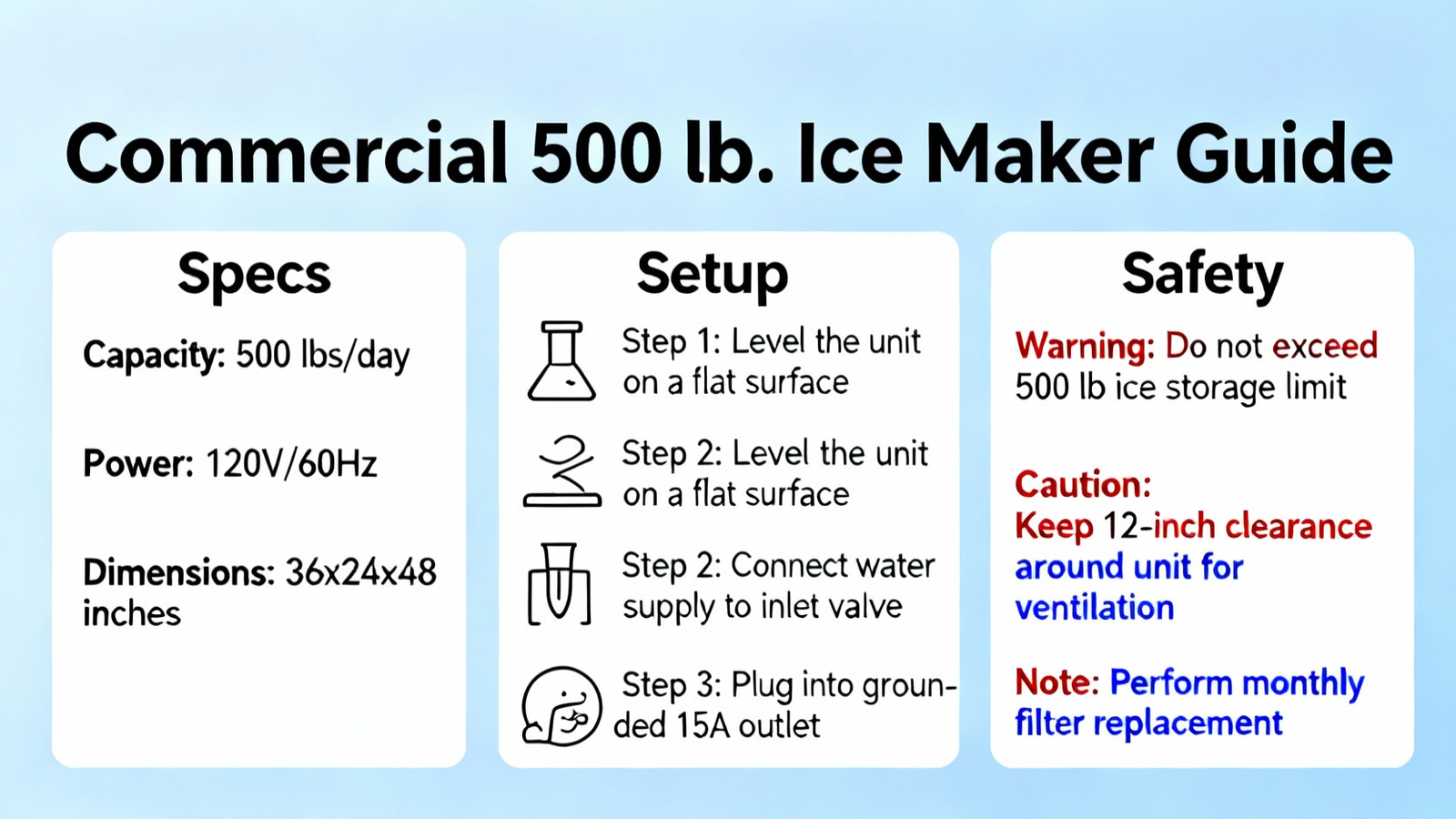
For restaurants, bars, and hotels, a reliable ice maker is the backbone of service. This guide delves into the critical specifications and installation requirements of a heavy-duty 500 lb./24h capacity commercial ice maker. We’ll explore its durable construction, essential setup for optimal performance, and vital safety protocols to ensure longevity and safe operation in your business.
Engineering for Endurance: Stainless Steel and Eco-Conscious Design
At the core of this unit is its durable stainless steel construction, a material chosen for its resistance to corrosion, ease of cleaning, and ability to withstand the rigorous demands of a commercial kitchen. This aligns with industry standards where hygiene and durability are paramount. Furthermore, the use of environmentally friendly R290 (propane) refrigerant is a forward-thinking choice. According to Wikipedia, R290 has a “negligible ozone depletion potential and very low global warming potential” compared to traditional hydrofluorocarbon (HFC) refrigerants, making it a more sustainable option as regulations evolve. Its compatibility with climate types SN, N, and ST ensures reliable performance across varied environmental conditions in the United States.
Power, Placement, and Prerequisites for Installation
Proper installation is non-negotiable for performance and safety. This commercial stainless steel ice maker operates on standard 110V 60Hz power, drawing 780W. It requires a dedicated drinking water supply with a pressure between 14.5-58 psi. Critical spatial requirements include maintaining at least 5.9 inches of clearance on all sides for airflow and ensuring the drainage outlet is lower than the machine’s port for effective gravity-fed wastewater removal. As emphasized in a Reddit discussion on commercial appliance setup, “Ventilation space isn’t a suggestion, it’s a requirement for heat exchange and preventing premature compressor failure” (u/KitchenOps, 2023-08-14). Upon delivery, the unit must be left upright for 24 hours to let the refrigerant and oils settle before initial use, a critical step often highlighted in manufacturer guidelines.
Operational Safety and Essential Usage Guidelines
Adhering to safety protocols protects both your staff and your investment. The ice maker comes with a three-prong plug and a 70-inch cord; using an extension cord is strongly discouraged as it can overheat and create a fire hazard. The unit must be kept away from flammable materials, direct sunlight, and heat sources like stoves. It is designed for indoor use only with water as the sole liquid for ice production. The Safety Protection Type I designation indicates it is grounded, providing a critical path for fault current. These precautions are not arbitrary; they are based on electrical safety standards designed to prevent accidents in busy food service environments.
Maximizing Performance and Long-Term Reliability
To ensure your 500 lbs./24h capacity ice maker operates at peak efficiency, understanding its operational nuances is key. The surrounding ambient temperature will directly influence ice production cycles, with hotter environments potentially slowing output. Regular maintenance, including cleaning and sanitizing as per the manual, is essential to prevent scale buildup and ensure food-safe ice. The self-contained design uses gravity for drainage, so the drain line must remain unobstructed. Investing in a proper water filtration system is highly recommended, as noted by industry professionals on Reddit, to improve ice clarity, taste, and significantly reduce mineral buildup that can damage the evaporator plate over time.
In summary, this heavy-duty commercial ice maker combines robust stainless-steel construction with modern, eco-friendly R290 refrigerant technology, making it a durable and sustainable choice for high-volume establishments. Its successful integration hinges on meticulous attention to installation prerequisites—proper electrical connection, water pressure, ventilation space, and drainage setup. Strict adherence to the outlined safety guidelines, from avoiding extension cords to indoor-only operation, is imperative for preventing hazards. Furthermore, understanding that factors like ambient temperature and water quality influence performance allows operators to proactively manage output and schedule maintenance. By following these comprehensive specifications and best practices, businesses can ensure this 23.2 in. capacity commercial ice maker delivers reliable, clean ice production day in and day out, supporting seamless service and contributing to the overall efficiency and safety of the foodservice operation.
This guide is super helpful for understanding the essential setup and specs of a 500 lb. commercial ice maker.
\}}
This guide is super helpful for understanding the essential setup and specs of a 500 lb. commercial ice maker.
\}}
This guide is super helpful for understanding the essential setup and specs of a 500 lb. commercial ice maker.
\}}
This guide is super helpful for understanding the essential setup and specs of a 500 lb. commercial ice maker.
\}}
This guide is super helpful for understanding the essential setup and specs of a 500 lb. commercial ice maker.
\}}
This guide is super helpful for understanding the essential setup and specs of a 500 lb. commercial ice maker.
\}}
This guide is super helpful for understanding the essential setup and specs of a 500 lb. commercial ice maker.
\}}
This guide is super helpful for understanding the essential setup and specs of a 500 lb. commercial ice maker.
\}}
This guide is super helpful for understanding the essential setup and specs of a 500 lb. commercial ice maker.
\}}