

Commercial Ice Makers: Key Features for High-Volume Service

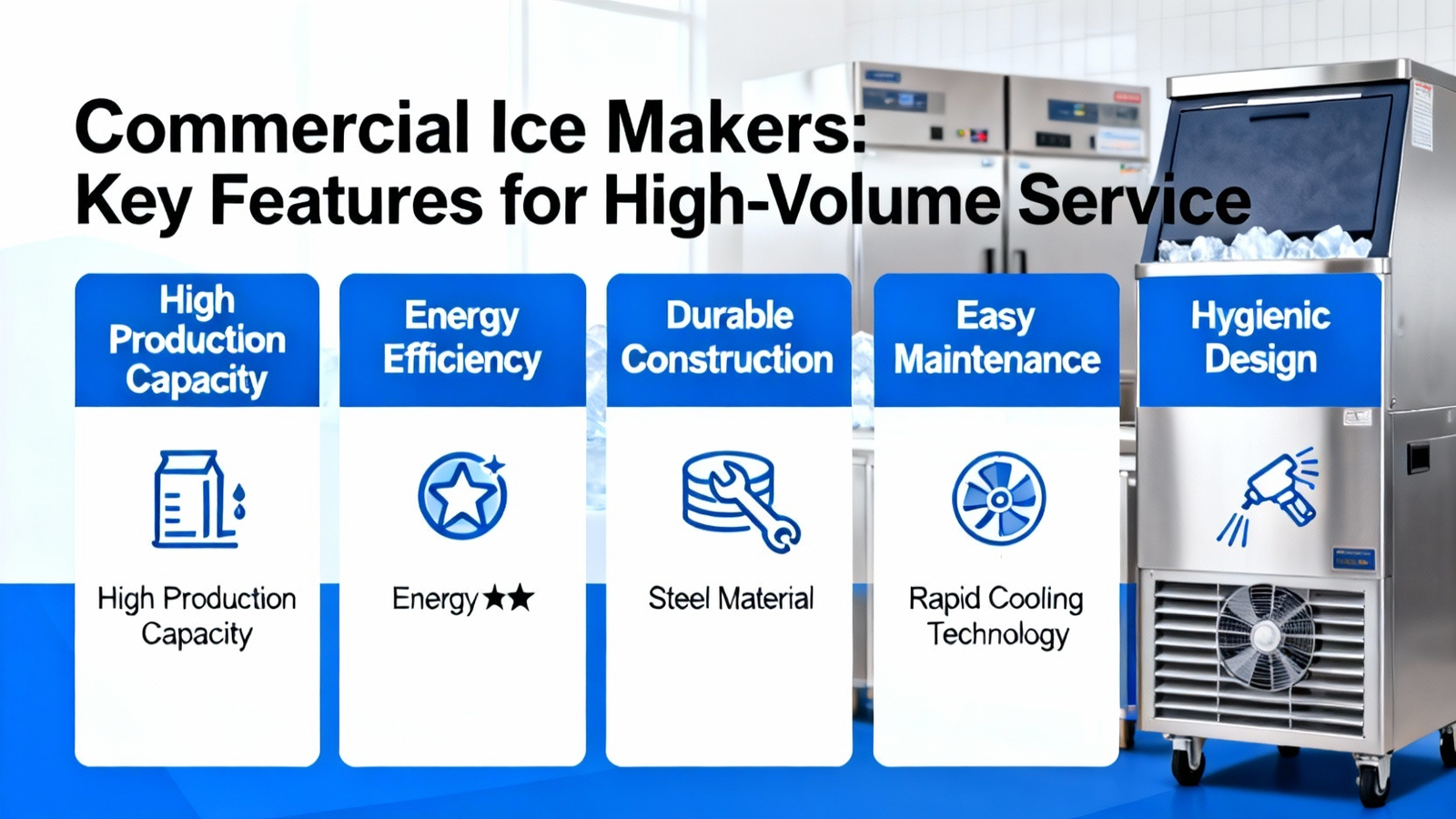
In the demanding world of food service and hospitality, a reliable ice supply is non-negotiable. This article explores the critical features of high-capacity commercial ice makers, focusing on how advanced technology like modular design and efficient filtration directly impacts business operations, customer satisfaction, and the bottom line.
Engineering for Uninterrupted Service
The core of any commercial ice maker is its ability to perform under pressure. Machines like the 22 in. 600 lbs. Stainless Steel Split Commercial Ice Maker utilize a split-system design, separating the evaporator from the condenser. This architecture, as noted in discussions on commercial kitchen efficiency, allows for installation flexibility and often results in quieter operation in the customer-facing area. The powerful compressor and fan system is the engine driving the daily production of up to 600 lbs of ice, a capacity designed to handle peak hours without faltering.
Intelligence and Control at Your Fingertips
Modern equipment transcends simple mechanics. A user-friendly touch control panel represents a significant leap in operational management. It allows staff to monitor bin levels, initiate cleaning cycles, and troubleshoot minor issues with intuitive feedback. This interface is crucial for preventative maintenance—a key point emphasized by equipment technicians on forums like r/KitchenConfidential, where poor maintenance is frequently cited as a leading cause of failure. Proactive control helps ensure consistent ice quality and machine longevity.
The Critical Role of Water Filtration
Ice clarity and taste are directly tied to water quality. An integrated advanced filtration system is not an optional extra but a necessity. It removes impurities and minerals that can cause cloudy ice, off-flavors, and, most damagingly, scale buildup inside the machine. Scale accumulation drastically reduces efficiency and can lead to costly repairs. The Wikipedia entry on ice machines explicitly states that water filtration is a primary method to prevent scale, highlighting its importance in manufacturer recommendations and daily operation for ensuring the final product is crystal-clear.
Designing for Hygiene and Accessibility
Storage and accessibility complete the ice service cycle. A generous 300 lb storage bin with a built-in scoop holder promotes proper food safety protocols by keeping the tool off counters and contained. This design consideration aligns with health code priorities. Furthermore, the stainless steel construction, as referenced in industry standards, offers durability and corrosion resistance while allowing for easy sanitation. The modular nature of a unit like the 182 Modular Ice Maker also simplifies cleaning and service access, a feature valued in professional settings for maintaining rigorous hygiene standards.
Investing in a commercial ice maker is a strategic decision that impacts daily workflow, customer perception, and operational costs. As we’ve detailed, the synergy between robust production (600 lbs daily), intelligent touch controls, mandatory water filtration, and hygienic storage design creates a system far greater than the sum of its parts. The split-system engineering ensures reliable performance, while user-friendly interfaces and scalable design empower staff and simplify maintenance—a concern consistently raised by industry professionals online. Ultimately, a machine that delivers consistent, clean ice seamlessly integrates into your service model. It eliminates the anxiety of running out during a rush and upholds the quality your brand represents. By choosing a unit designed with these advanced features, you’re not just purchasing an appliance; you’re upgrading your operational backbone, ensuring your business is equipped to keep customers refreshed and satisfied, day in and day out.