

Modern Commercial Ice Makers: Intelligence, Hygiene, Capacity

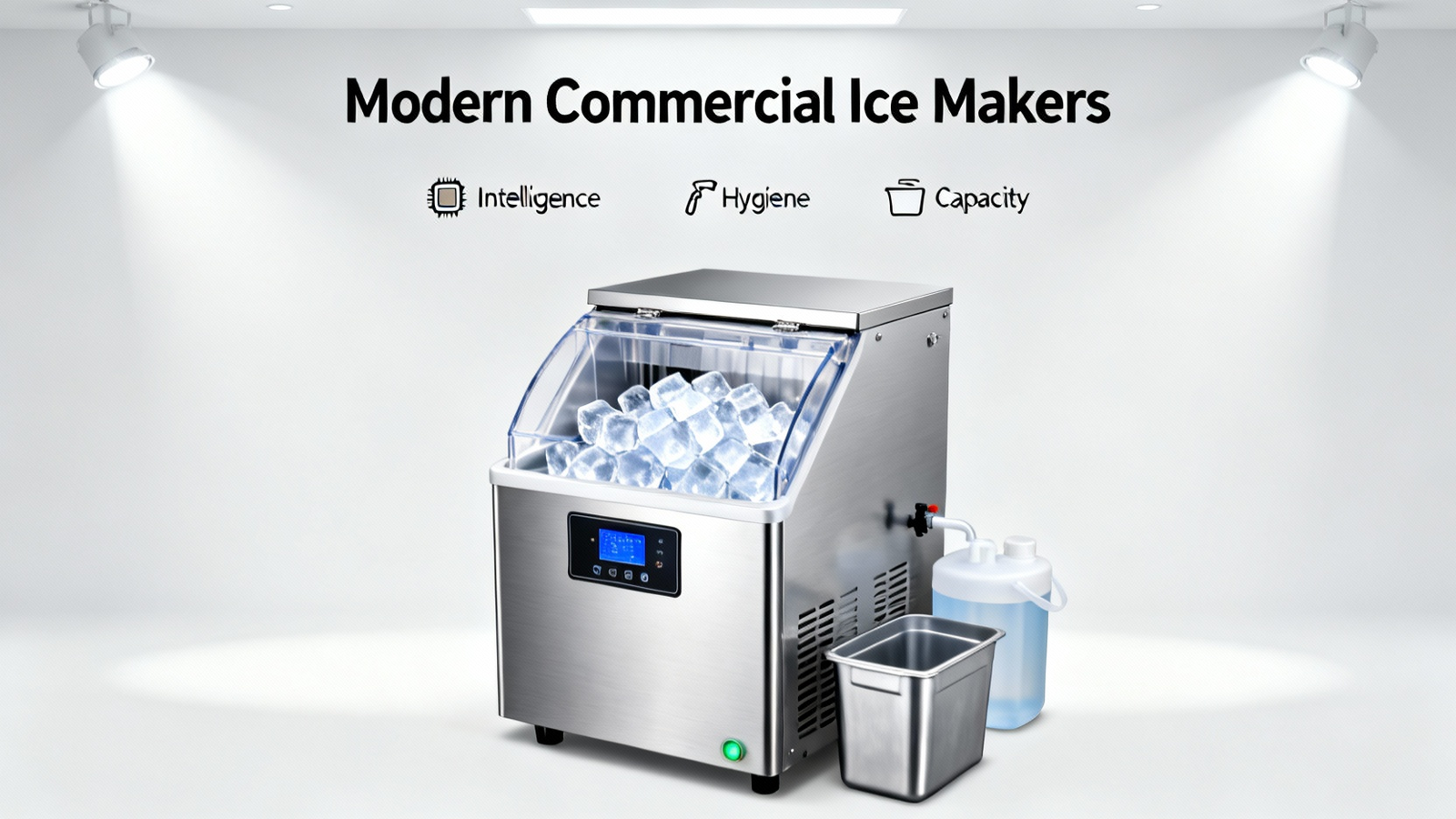
For any business, a reliable ice supply is non-negotiable. This article explores the advanced features of modern commercial ice makers, focusing on how innovations like fault alerts and automated systems ensure operational efficiency, hygiene, and consistent output for demanding environments.
Intelligent Operation: The Brain Behind Uninterrupted Production
Modern commercial ice makers transcend simple freezing. They incorporate intelligent systems designed for proactive maintenance. Features like fault alerts and water shortage notifications act as an early warning system, preventing minor issues from escalating into costly downtime. This aligns with broader industry trends towards predictive maintenance, which uses data to anticipate failures. As noted in a discussion on commercial kitchen equipment reliability, a user emphasized that “the alert systems are what separate the high-uptime units from the problematic ones” in a Reddit thread from October 2022. This intelligence ensures the 22.3 in. 450 lbs. /24h Ice Capacity 300 lbs Split Commercial Ice Maker operates seamlessly.
Engineered for Efficiency and Stability
Performance hinges on foundational engineering. Auto-defrost technology is critical, eliminating manual cycles that halt production and waste labor. Furthermore, stability is not an afterthought. Four adjustable feet allow for perfect leveling on uneven floors, a simple yet vital feature. An unlevel ice maker can suffer from uneven water distribution, leading to inconsistent ice thickness and reduced harvest rates, a point often cited by technicians in online forums. This precise engineering ensures the machine’s stated capacity—like producing over 14,900 cubes per day—is a reliable metric, not just a theoretical maximum.
Hygiene, Access, and User-Centered Design
Hygiene in ice production is paramount. An integrated water filter is essential for removing impurities that affect taste and clarity, a concern validated by Wikipedia’s emphasis on ice machine sanitation. User-centric design further supports cleanliness and convenience. A flip-up bin door and included ice scoop provide easy, sanitary access without cross-contamination. The blue-lighted storage bin is both an aesthetic and functional feature, providing clear visibility of ice levels in any lighting, ensuring staff can monitor supply at a glance.
Maximizing Capacity and Drainage Flexibility
The true test of a commercial unit is its ability to meet peak demand. A large-capacity system, such as one with a 300 lb. storage bin producing 450 lbs. per day, is designed for continuous service in busy establishments. This high yield prevents the embarrassment of running out during critical times. Equally important is drainage flexibility. The option for both water pump drainage and gravity drainage for the storage bin provides crucial installation versatility, allowing the split commercial ice maker to be configured in a wider range of locations based on existing plumbing infrastructure.
In conclusion, selecting a commercial ice maker requires looking beyond basic output numbers. As we’ve explored, the integration of intelligent alerts for faults, water levels, and bin capacity forms a critical operational nervous system, preventing waste and downtime—a need highlighted by industry professionals in online discussions. The combination of automated defrosting, rigorous hygiene through filtration, and user-focused design like lighted bins and flip-up doors directly addresses the daily practicalities of kitchen and bar staff. Furthermore, the substantial production capacity and flexible drainage options ensure that high-volume demands can be met reliably in various installation scenarios. Ultimately, a machine that masters these elements—intelligence, engineering, hygiene, and capacity—does more than just make ice. It provides operational peace of mind, ensuring that a business is always prepared to serve its customers without interruption, making it a sound investment for any serious establishment looking to optimize its back-of-house operations.
This article really highlights how the intelligence built into modern ice makers is a game-changer for operational efficiency.
\}}
This article really highlights how the intelligence built into modern ice makers is a game-changer for operational efficiency.
\}}
This article really highlights how the intelligence built into modern ice makers is a game-changer for operational efficiency.
\}}
This article really highlights how the intelligence built into modern ice makers is a game-changer for operational efficiency.
\}}
It’s impressive how modern ice makers use intelligence to maintain both hygiene and capacity without constant oversight.
\}}
It’s impressive how modern ice makers use intelligence to maintain both hygiene and capacity without constant oversight.
\}}
It’s impressive how modern ice makers use intelligence to maintain both hygiene and capacity without constant oversight.
\}}