

Modern Commercial Ice Makers: Automation, Hygiene, Capacity

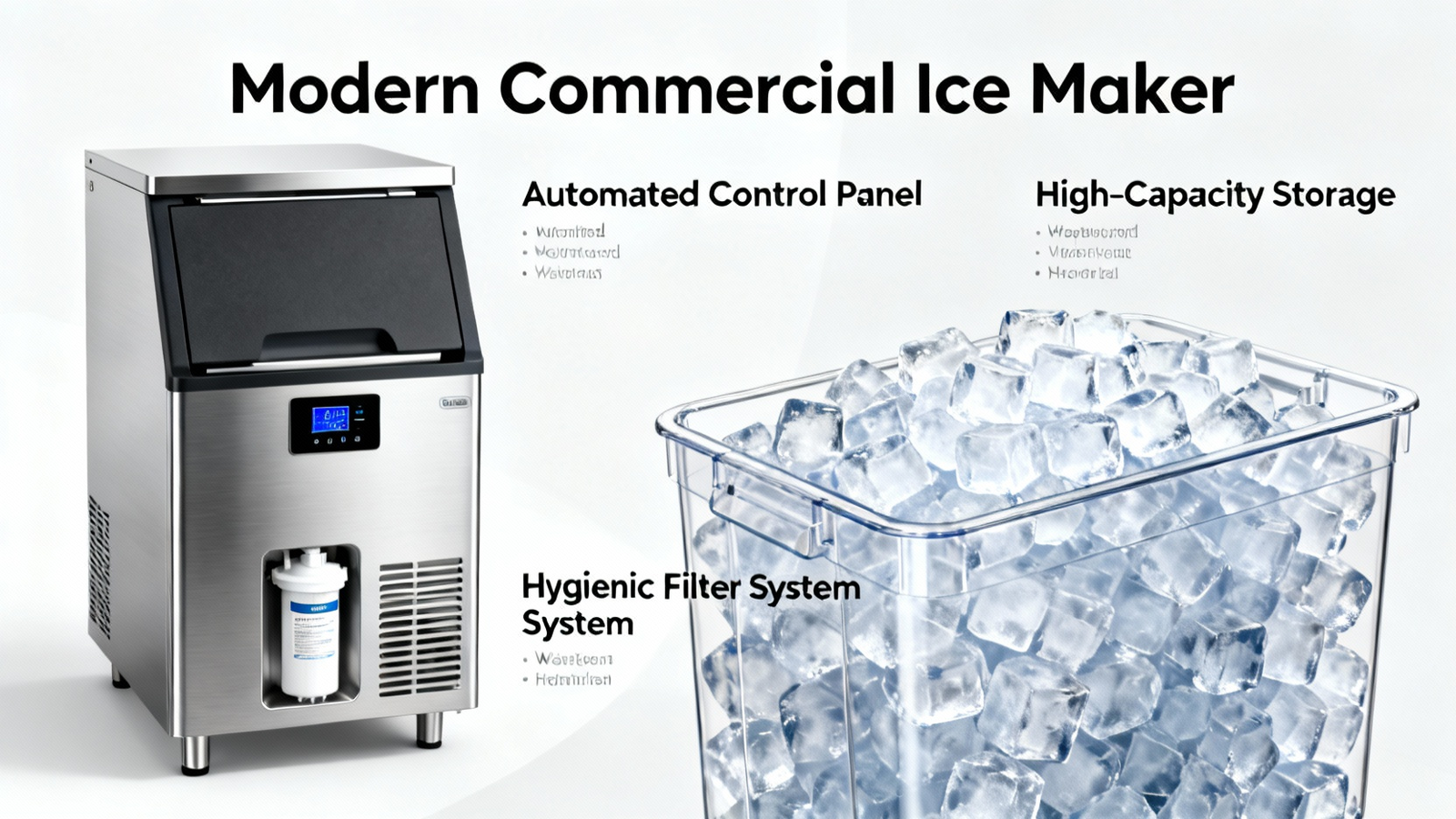
In the demanding world of commercial food service and hospitality, ice production is a critical, non-negotiable operation. This article explores the advanced features of modern commercial ice makers, focusing on how innovations in automation, capacity, and user-centric design ensure reliability, hygiene, and efficiency for businesses. We will delve into the specific technologies that prevent downtime and maintain seamless service.
Intelligent Automation for Uninterrupted Operation
Modern commercial ice makers transcend basic freezing functions by integrating smart system monitoring. Features like fault alerts and water shortage alerts act as a proactive maintenance team, notifying staff of issues before they halt production. This is crucial, as equipment failure directly impacts revenue and customer satisfaction. The auto-defrost function is another key automation, eliminating a labor-intensive chore. By periodically melting frost buildup, it ensures the unit runs at peak efficiency, which is supported by general principles of refrigeration efficiency noted in Wikipedia’s overview of refrigeration. This combination of alerts and automation creates a foundation for dependable, uninterrupted ice production.
Engineering for Capacity and Stability
The core mandate of a commercial unit is high-volume output. A machine like the 22.3 in. 450 lbs. /24h Ice Capacity 300 lbs Split Commercial Ice Maker is engineered for this demand, producing hundreds of pounds of ice daily. This capacity must be matched by physical stability. 4-adjustable feet are not a minor detail; they ensure perfect leveling, which is critical for the unit’s internal water distribution and freezing components. An unlevel ice maker can produce thin or misshapen cubes and cause premature wear, a point often emphasized by users in industry discussions. Furthermore, the large storage bin with a discreet ice full alert maximizes harvest cycles without wasteful overflow.
Hygiene, Access, and User Experience
Hygiene in ice production is paramount. An integrated water filter is essential for improving ice clarity and taste by removing sediments and impurities, a concern frequently raised in hospitality forums. User-centric design features then ensure this clean ice is handled properly. The flip-up ice bin door and included ice scoop promote sanitary serving by minimizing hand contact with the ice supply. The intuitive touch control panel simplifies operation for all staff members, while the blue-lighted storage bin provides both aesthetic appeal and practical visibility in low-light bar or kitchen environments. These features collectively reduce contamination risk and streamline service.
Practical Installation and Drainage Flexibility
Finally, practical considerations for installation and maintenance define long-term usability. The split-system design of a commercial ice maker, where the condenser is separate from the ice-making head, offers flexibility in placement and can improve kitchen cooling efficiency. Drainage options are critical for proper function. The availability of both water pump drainage and gravity drainage for the storage bin provides installation versatility to suit different kitchen layouts, as gravity drainage requires specific elevation. This flexibility is a key point in professional evaluations, ensuring the unit can be adapted to the existing infrastructure of a busy establishment.
Choosing a commercial ice maker is an investment in the operational heartbeat of a food service business. As we’ve explored, the decision should extend beyond mere daily pound capacity to encompass a suite of intelligent features. Proactive system alerts and auto-defrost functions minimize downtime and manual labor, while robust construction with adjustable feet guarantees consistent performance. Hygiene is addressed at the point of production with a water filter and at the point of service with design elements like the flip-up door. The high output of a model like the 300 lbs storage bin commercial ice maker meets volume demands, and its drainage flexibility ensures it can be integrated into various kitchen plans. In conclusion, a modern, feature-rich ice maker is not just an appliance; it is a silent partner in customer satisfaction, ensuring that no beverage is ever left waiting and that operational flow in your busy establishment remains uninterrupted, efficient, and hygienic.
It’s fascinating how modern ice makers now prioritize automation and hygiene to meet such critical demands.
\}}
It’s fascinating how modern ice makers now prioritize automation and hygiene to meet such critical demands.
\}}
It’s fascinating how modern ice makers now prioritize automation and hygiene to meet such critical demands.
\}}
It’s fascinating how modern ice makers now prioritize automation and hygiene to meet such critical demands.
\}}
It’s fascinating how modern automation and design in commercial ice makers directly address those critical needs for reliability and hygiene in a busy kitchen.
\}}
It’s fascinating how modern automation and design in commercial ice makers directly address those critical needs for reliability and hygiene in a busy kitchen.
\}}
It’s fascinating how modern automation and design in commercial ice makers directly address those critical needs for reliability and hygiene in a busy kitchen.
\}}
It’s fascinating how modern automation and design in commercial ice makers directly address those critical needs for reliability and hygiene in a busy kitchen.
\}}