

Commercial Stainless Steel Ice Maker: 500 lbs/24h Guide

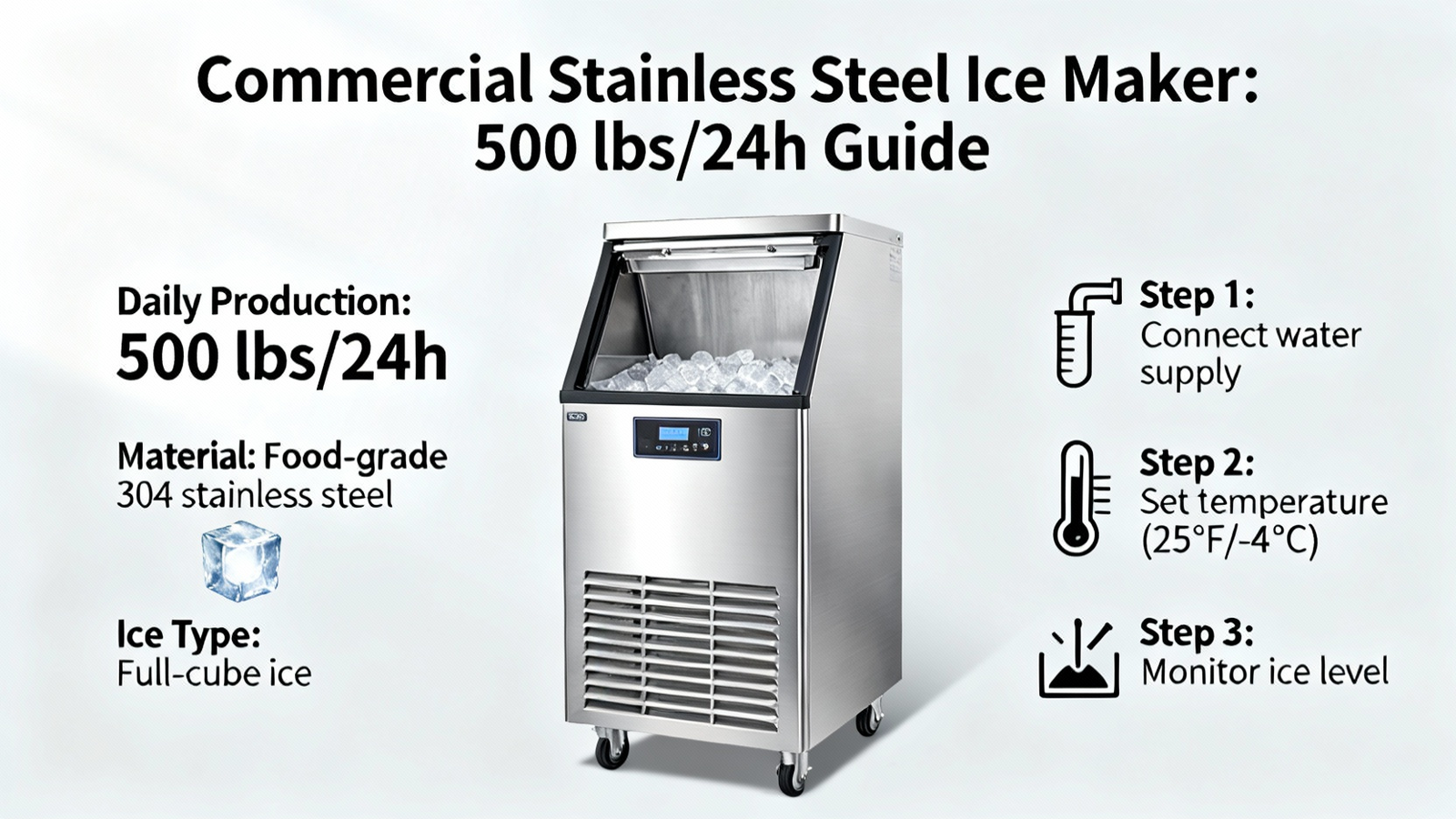
For restaurants, bars, and hotels, a reliable ice maker is the backbone of service. This guide delves into the 23.2 in. 500 lbs./24h Capacity Commercial Stainless Steel Ice Maker, exploring its durable construction, optimal installation, and critical safety protocols. Understanding these facets ensures you maximize performance, longevity, and safety in your commercial operation.
Engineering for Endurance: Stainless Steel and R290 Refrigerant
The cornerstone of this ice maker’s reliability is its heavy-duty stainless steel construction. This material is chosen for its superior corrosion resistance, ease of cleaning, and ability to withstand the constant moisture and high-traffic demands of a commercial kitchen. Paired with this is the use of environmentally friendly R290 (propane) refrigerant. R290 has a significantly lower Global Warming Potential (GWP) compared to traditional HFCs, aligning with modern environmental standards. As noted in discussions on commercial equipment efficiency, natural refrigerants like R290 are gaining favor for their environmental and performance benefits, though proper handling is crucial due to flammability. The unit’s compatibility with climate types SN, N, and ST further ensures stable performance across varied ambient temperatures common in North American operations.
Strategic Installation for Peak Performance
Proper installation is not just recommendation—it’s a requirement for efficiency and machine health. The unit’s dimensions (26.4 × 23.2 × 61.4 in) and substantial net weight of ~145.51 lb demand a planned location. Critical steps include:
- Water Source & Pressure: A direct connection to drinking water is mandatory. The water pressure must be maintained between 14.5-58 psi. Pressure outside this range can severely impact ice production and component lifespan, necessitating a changeover valve.
- Ventilation & Drainage: A minimum 5.9 inches (15 cm) of clearance on all sides is required for airflow, preventing overheating. Equally critical is connecting the gravity drain pipe, with its outlet lower than the machine’s port, to efficiently handle meltwater discharge.
- Initial Setup Protocol: Upon delivery, the unit must remain upright for 24 hours before initial use to allow the refrigerant oil to settle, a common requirement for compressor longevity cited in appliance manuals and technician forums.
Critical Safety and Operational Guidelines
Adhering to safety guidelines protects both your investment and your premises. The ice maker comes with a three-prong plug and a 70″ power cord; using an extension cord is strongly discouraged as it can overheat and pose a fire risk, a warning frequently echoed by the U.S. Consumer Product Safety Commission. Furthermore, the unit must be kept away from flammable materials, direct sunlight, and heat sources like stoves. It is designed for indoor use only and should never be used with any liquid other than water to make ice. These precautions align with the Safety Protection Type I classification, indicating built-in basic insulation protection.
Optimizing Long-Term Reliability
To ensure consistent daily output of up to 500 lbs., operational awareness is key. Recognize that surrounding environmental temperature directly influences ice-making cycle times; higher ambient temperatures can reduce efficiency. Regular maintenance, such as cleaning and sanitizing according to the manufacturer’s schedule, is essential to prevent scale buildup and maintain ice quality. For high-volume needs, this commercial stainless steel ice maker represents a robust solution. Its 110V/60Hz operation makes it versatile for many US commercial settings, providing a balance of high capacity and standard electrical compatibility.
In conclusion, the 23.2 in. 500 lbs./24h Commercial Stainless Steel Ice Maker is a formidable asset for any foodservice business, but its value is fully realized only through informed operation. Its durable stainless steel build and eco-friendly R290 refrigerant system offer modern efficiency and longevity. Success hinges on meticulous attention to installation prerequisites—proper water pressure, mandatory clearance, and correct drainage—as well as strict adherence to safety protocols like avoiding extension cords and outdoor use. As with any complex commercial appliance, foundational knowledge prevents costly errors. By integrating this heavy-duty ice maker into your operation with the guidelines outlined, you establish a reliable foundation for daily service, ensuring a steady supply of ice while safeguarding your staff, customers, and business investment for the long term.
This guide really highlights why a reliable commercial stainless steel ice maker is such a crucial investment for busy operations.
\}}
This guide really highlights why a reliable commercial stainless steel ice maker is such a crucial investment for busy operations.
\}}
This guide really highlights why a reliable commercial stainless steel ice maker is so essential for high-volume operations.
\}}
This guide really highlights why a reliable commercial stainless steel ice maker is so essential for high-volume operations.
\}}
This guide really highlights why a reliable commercial stainless steel ice maker is so essential for high-volume operations.
\}}
This guide really highlights why a reliable commercial stainless steel ice maker is so essential for high-volume operations.
\}}
This guide really highlights why a reliable commercial stainless steel ice maker is so essential for high-volume operations.
\}}